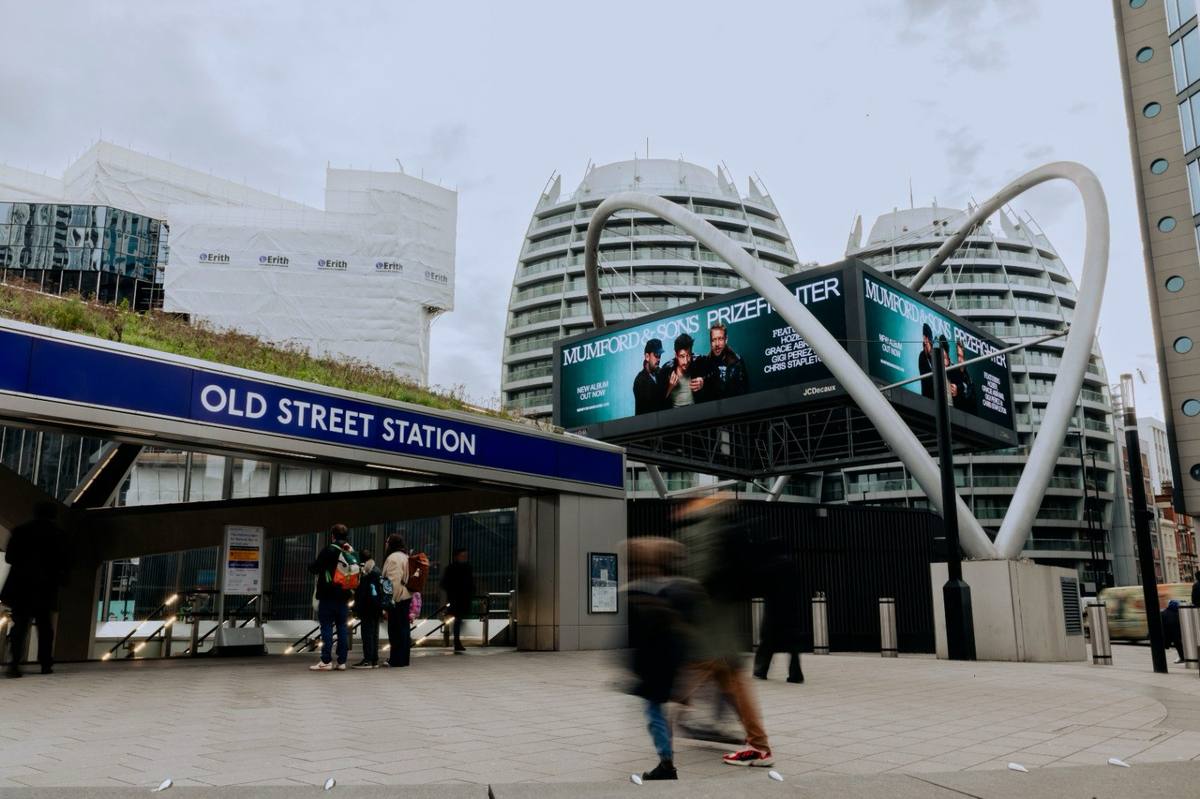
The question comes up on almost every brief: should this campaign run on digital screens, print formats, or both? The answer depends on the objective, the budget, the timeline and what the campaign needs to do in the real world.

Neither format is universally better. They have different strengths, different costs and different roles in a well-planned media schedule. Here is how we think about the decision.

What digital OOH does well

DOOH screens are flexible in a way that print formats are not. You can change the creative during a campaign. You can run different messages at different times of day — a coffee brand pushing morning commuters with breakfast messaging and switching to afternoon sluggishness after lunch. You can respond to live events: a sports brand activating during a fixture, a music release going live at midnight.

DOOH also delivers measurability that print cannot match. Footfall data, audience demographics and campaign delivery reports are all available at a granularity that traditional formats do not offer. If you need to demonstrate ROI in a format a finance director will recognise, digital screens make that case easier.

For short-window campaigns — a product launch, a release day activation, a limited-time event — DOOH is often the right answer. You can book it quickly, go live fast and pull it when the window closes.

What traditional OOH does well

Print formats — 48-sheets, 96-sheets, bus supersides, Underground panels — deliver frequency in a way that digital screens cannot match. A print site runs your creative continuously, 24 hours a day, for the full booking period. There is no share of voice, no carousel rotation, no competing advertiser. The format is yours.

That exclusivity has a tangible effect on brand recall. Research consistently shows that print OOH outperforms digital screens on unaided recall, particularly for campaigns running over longer periods. The repetition builds memory structures that a time-shared digital format does not.

Print formats also carry a different kind of cultural weight. A full building wrap in Shoreditch or a 96-sheet on a major arterial route signals scale and investment in a way that a screen rotation does not. For prestige campaigns, product launches and brand repositioning, print can be the right choice purely for what it signals.

The cost reality

Traditional print formats are generally more expensive to produce (artwork, printing, installation) but cheaper to buy per-site than premium DOOH locations. DOOH production is cheaper — you supply a digital file — but premium screen locations in high-footfall city centres carry significant media costs.

The meaningful comparison is not cost per site but cost per objective. If you need maximum frequency in a single location over four weeks, print usually wins on efficiency. If you need national reach with daily creative rotation across a month, DOOH is more practical.

When to use both

The strongest campaigns use both formats deliberately. A typical approach we plan for music releases and major brand campaigns:

The print sites provide the cultural statement. The DOOH drives frequency. The DigiVans create the street-level moments that generate social content.

Making the decision

Three questions determine the format split on any brief:

First, how long is the campaign running? Under two weeks favours DOOH. Four weeks and above, print becomes competitive on efficiency.

Second, does the creative need to change during the campaign? If yes, DOOH. If the message is fixed, print delivers better frequency per pound.

Third, what is the primary objective? Brand building and cultural presence favour print. Targeted reach, event activation and measurable performance favour DOOH.

The honest answer is that most campaigns benefit from a combination — the question is just what ratio. That is the planning conversation we have with every client before a single site is booked.

Related Reading Why OOH Still Wins in a Saturated Digital Market → The DigiVan Playbook → Our Advertising Services →