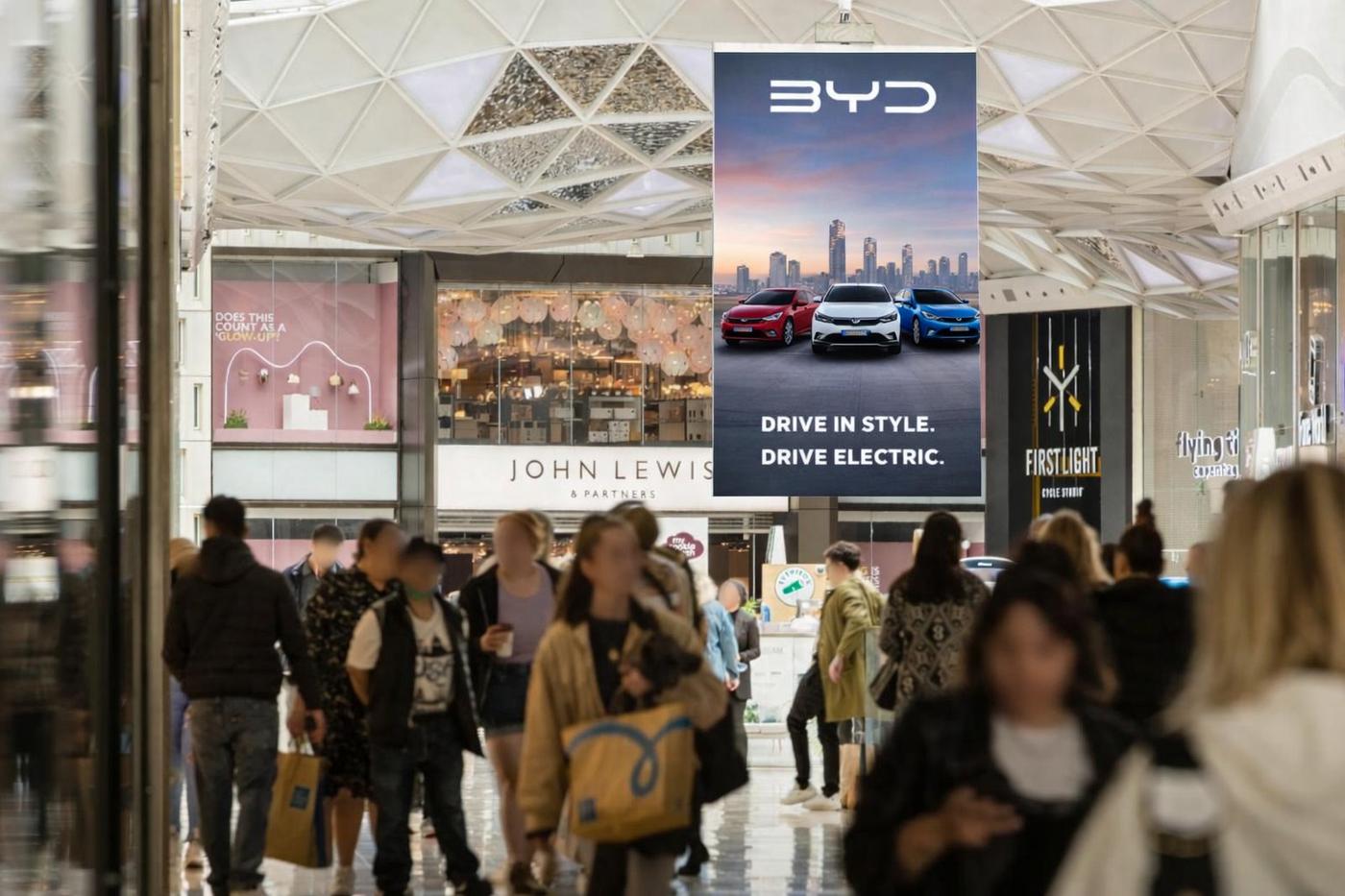
Most brands buying OOH for the first time make the same mistakes. They book based on locations they personally find impressive rather than where their audience concentrates. They underestimate lead times and miss the window they were planning for. They treat it as a one-off rather than a sustained presence and wonder why it did not move the needle.
This guide covers what you should understand before spending a pound on outdoor advertising.
Understand the formats before you choose locations
OOH is not a single medium. It is a family of formats with different costs, different contexts, different audiences and different roles in a campaign. Before thinking about specific sites, understand what each format does:
- Large format (96-sheets, 48-sheets): High-impact, high-cost. Best for brand building and cultural presence. Maximum impression at minimum sites.
- 6-sheets and D6: Street-level formats in pedestrian areas. High frequency, proximity to retail environments. Best for conversion-focused messaging.
- Bus supersides and taxi wraps: Moving formats. High reach in urban areas, good for frequency building across city demographics.
- London Underground: Captive audience, significant dwell time. Premium cost, premium attention. Best for detailed messaging and brand storytelling.
- DOOH screens: Digital formats — flexible creative, data-driven targeting, real-time activation. Higher cost per screen but lower production costs.
- DigiVans: Mobile LED screens. Maximum targeting precision. Drive to a specific location, audience or event.
Most first campaigns benefit from a single format done well rather than a spread across multiple formats at insufficient weight. Pick the format that serves your primary objective and buy enough of it to matter.
Lead times are longer than you think
This is the most common problem on first OOH campaigns. Brands assume they can book today and go live in a week. Traditional print formats require two to four weeks minimum from booking to live — artwork production, printing, installation. For complex formats like building wraps, add another two to four weeks.
DOOH and DigiVans are faster — digital files can go live within days of booking and creative can be uploaded with 24-48 hours notice. If you have a short window or a reactive brief, digital formats are the practical choice.
The planning timeline for a first OOH campaign:
- Brief and format selection: allow one week
- Site planning and negotiation: one to two weeks
- Creative production and artwork: one to two weeks
- Booking confirmation and traffic: one week
- Installation and live: one week for DOOH, two to three weeks for print
Total: six to ten weeks from decision to live for a print campaign. Three to four weeks for a DOOH campaign. Build this into your launch planning.
How OOH is bought and priced
OOH is sold in two ways: fixed-term bookings (you own a site for a defined period, usually two weeks minimum) or programmatic DOOH (you buy impressions on a network of screens, served algorithmically based on audience data).
For most first campaigns, fixed-term bookings give more control and more predictability. You know exactly which sites you are running, when and for how long. Programmatic gives scale and targeting flexibility but is harder to visualise and less useful for building specific cultural presence.
Pricing varies enormously by format, location and season. A 48-sheet in a secondary market might cost £500-800 for two weeks. The same format on a premium arterial route in London or in a major transit hub can cost ten times more. Do not approach OOH with a single line-item budget — understand what each format costs in your target locations before committing.
Creative that works for OOH
The most common creative mistake is treating OOH artwork like a social post or a digital display banner. OOH is seen at speed, at distance and in conditions you cannot control. The rules are simple and non-negotiable:
- One message only. Not three bullet points. Not a headline, a sub-headline and a body copy paragraph. One thing.
- Text must be readable from 50 metres in five seconds. If it requires squinting, it fails.
- The brand must be instantly identifiable. Logo prominent, colour consistent, no ambiguity about who is talking.
- No QR codes on formats that are seen from a car or at distance. They do not work in context.
How to measure results
OOH measurement has improved significantly with DOOH. Digital screens provide delivery reports, audience data from mobile device proximity and, in some cases, direct attribution via store visits or web traffic uplift. For traditional print formats, measurement is less granular but still available through audience research panels and brand tracking surveys.
For a first campaign, the most practical measurement approach is to track the metrics that matter for your business objective — search volume uplift, website traffic from the campaign period, direct sales in the areas where you ran — rather than trying to measure every impression. Set a clear objective before you book. Measure that specific thing after.
OOH campaigns that run for longer, at higher weight, in more concentrated locations consistently outperform low-weight, short-duration campaigns. The format rewards commitment.