OOH is not a one-size-fits-all medium. The right format, the right location split, the right duration and the right measurement approach vary significantly by sector. What works for a music album launch looks nothing like what works for a fintech brand building mass awareness. What works for a luxury fashion house is incompatible with an FMCG launch.

These are the playbooks we return to when planning campaigns across the sectors we work in most frequently.

Music: the release-window playbook

Music campaigns are defined by their windows. The week of a release, the weeks running into a tour announcement, the 48 hours when ticket sales are live. OOH has to activate fast and generate maximum impact in a compressed period.

The standard music OOH structure:

The critical variable in music OOH is geographic concentration. Spread budget thinly across many markets and nothing lands. Concentrate it in the markets where the fanbase indexes highest and the campaign has impact.

FMCG and challenger consumer brands

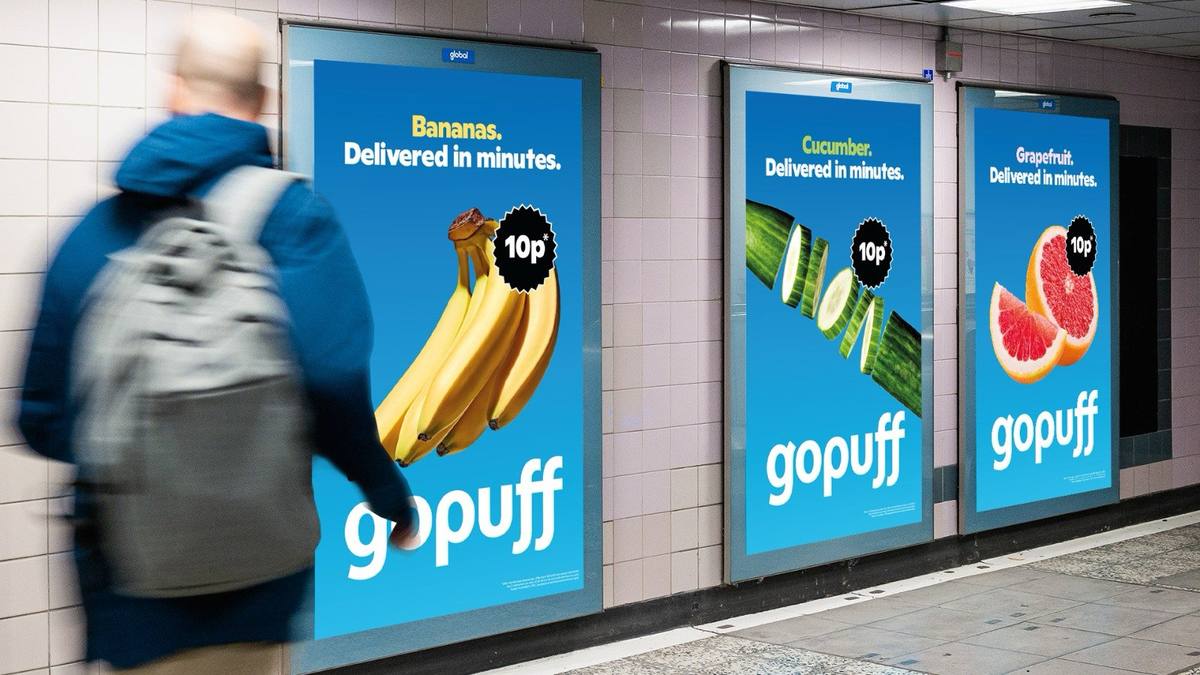
Consumer goods brands need frequency. A single high-impact site generates awareness. Frequency — seeing the same message across multiple formats, multiple locations, multiple times — drives consideration and purchase intent.

The FMCG playbook prioritises reach over prestige. Bus supersides, 6-sheets in proximity to retail environments, digital 6-sheets in commuter zones. Lower cost per site means higher volume of touchpoints for the same budget. The creative needs to work at a glance and communicate a single simple message — format, product, occasion.

Proximity to point of purchase is the key planning principle. A campaign that puts the brand in front of consumers on the route to the supermarket outperforms a campaign that reaches them on an arterial road with no retail context.

Fintech and challenger financial brands

Fintech OOH is primarily a brand-building exercise. The objective is to convert a brand that exists in an app or online into something that feels real, substantial and trustworthy. Physical presence does this in a way that digital advertising cannot.

The fintech playbook uses large format OOH in central business districts, commuter transit environments and major arterial routes into financial centres. The audience — young professionals, early-adopters, business decision-makers — concentrates in those locations. The scale of placement signals that the brand has real substance behind it.

The most effective fintech OOH campaigns keep creative simple: brand mark, single value proposition, no product complexity. The physical presence makes the implicit argument. The creative does not need to do all the work.

Fashion and luxury

Fashion OOH divides sharply between mass-market and luxury, and the playbook is almost opposite for each.

Mass-market fashion — high street brands, sportswear, fast fashion — uses OOH in the same way as FMCG. High volume, proximity to retail, frequency-driven. The format choice leans toward bus and street-level formats that reach the broadest demographic.

Luxury fashion uses OOH as a context statement. A full building wrap in Mayfair. A single 96-sheet on a premium arterial route near Bond Street. The placement is the message: this brand belongs here. Less is more — a luxury brand appearing on a discount retailer adjacent 6-sheet undermines the positioning regardless of the creative quality.

Wild posting occupies the interesting middle ground — culturally credible for premium fashion brands trying to reach a younger urban audience without the prestige positioning of traditional luxury. Used well by Gymshark, Supreme and similar brands for exactly this reason.

Retail and e-commerce

For retail and e-commerce, OOH works best in the final mile — the proximity placements that create awareness and drive footfall or online traffic in a defined window. Promotional OOH (sale periods, new store openings, limited offers) benefits from DOOH for its flexibility to reflect live pricing and timing.

The measurement approach for retail OOH is more tractable than most sectors because the conversion event is relatively tight. Store visits, web traffic from the campaign period and basket data in the campaign markets versus control markets all provide meaningful attribution.

Entertainment: film, TV and streaming

Entertainment OOH activates against specific release dates in the same way as music. The difference is that the brief often comes with a larger budget and more complex creative requirements — multiple talent names, legal obligations, a visual that has to compete with a saturated promotional environment.

The entertainment playbook uses large format OOH for the visual impact that streaming thumbnails and social posts cannot match. A 96-sheet for a major film release communicates scale and cultural importance. DOOH adds frequency across commuter and retail environments in the weeks running into release. Both formats need to carry a single dominant visual — the cast, the key art, the title. Nothing else.

Across every sector, the underlying principles are the same: define the objective before choosing the format, plan the geography around where the audience actually is, and buy enough weight to matter. Half-measures in OOH produce half-results.

Related Reading Why Music Campaigns Own the Streets → First-Time OOH Buyer's Guide → Case Study: Gopuff — National OOH Campaign →