Digital advertising is cheaper to buy than it has ever been. It is also easier to ignore than it has ever been. The two facts are connected.

Consumers have spent the last decade developing genuinely sophisticated defences against digital ads. They scroll past. They swipe up. They install blockers. Their eyes have learned to skip the banner at the top of the page. The result is that CPMs have climbed while actual attention — the thing advertisers are trying to purchase — has collapsed.

OOH exists outside that feedback loop. You cannot block a billboard. You cannot skip a 48-sheet on the Westway. The format forces presence in a way that no digital channel can replicate.

The attention argument

The scarce resource in modern marketing is not reach. It is genuine attention. Digital advertising reaches vast numbers of people, but for fractions of a second — and most of those fractions are spent actively trying not to notice the ad. OOH, by contrast, holds attention during dead time: the commute, the walk between meetings, the wait for the bus.

That dwell time is valuable in a way that the digital industry has consistently underestimated. A commuter on the Victoria line sees a platform poster for thirty seconds or more. A driver on a retail park approach sees the same billboard format three times a week for months. That frequency, combined with genuine dwell time, produces brand recall that a banner impression simply cannot match.

Research consistently shows that OOH generates higher unaided brand recall than equivalent digital spend. The physical presence of a well-placed campaign creates a memory trace that scrolled content does not.

The cultural credibility argument

There is a reason the biggest artists, the most ambitious brands and the highest-spending advertisers still put significant money into OOH. Being on the street, at scale, signals something. It signals that a brand believes in itself enough to plant its flag in the real world — not just in an algorithmically targeted feed.

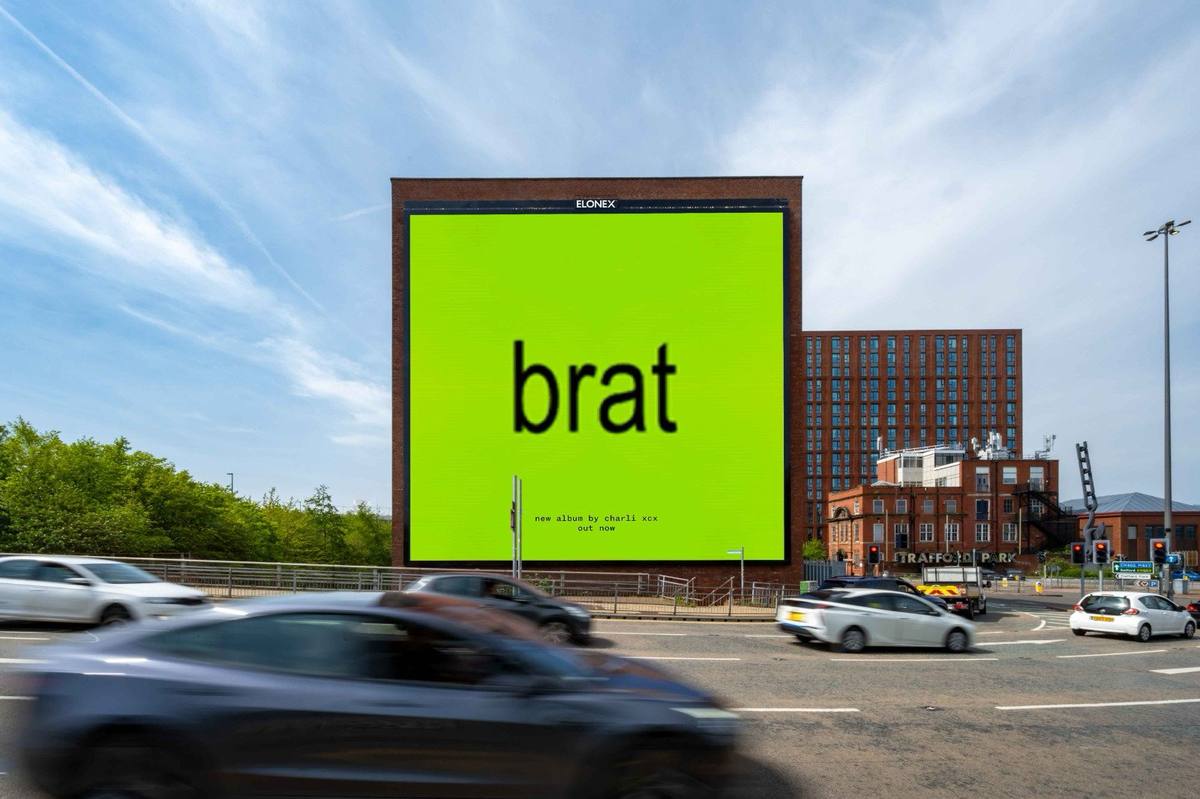
When Charli XCX ran BRAT across London and New York on launch day, the billboards generated social content. Fans photographed them, shared them, tagged them. The paid placement became earned media because the format has an inherent shareability that digital ads lack. Nobody photographs a banner ad.

That cultural weight is particularly relevant for music, fashion and challenger consumer brands — categories where being seen matters as much as being heard.

The digital amplification effect

OOH and digital are not in competition. They amplify each other. Studies show that campaigns running OOH alongside digital see significantly higher click-through rates on the digital component. The physical presence builds awareness and primes the audience. When they then encounter the brand online, they respond differently.

This is why the most effective campaigns we plan at Breaking Ads rarely use OOH in isolation. A national billboard buy creates the brand presence. Retargeted digital builds on top of it. The OOH does the heavy lifting on awareness. The digital closes the gap to conversion.

What the data actually shows

The Advertising Association's annual data consistently places OOH among the highest-returning ad formats for brand metrics. Key findings that hold across multiple years of research:

None of this means digital does not work. It means OOH works differently, and for certain objectives — brand building, cultural presence, launch moments — it works better.

The practical case for OOH in 2026

Digital advertising costs are rising. Competition for attention in feeds is intense. The brands that will win the next decade are those that build real-world presence alongside digital presence — not instead of it.

OOH is not a legacy format. It is the one channel that has consistently grown its share of total ad spend as digital has matured, precisely because it solves the problem digital created. When everything else is skippable, the thing that cannot be skipped becomes more valuable.

We have run hundreds of OOH campaigns across the UK, Middle East and internationally. The brief is almost always the same: make the brand impossible to miss. OOH is the most direct way to do that.

Related Reading DOOH vs Traditional OOH: When to Use Which → First-Time OOH Buyer's Guide → Case Study: Gopuff — 30% Sales Increase via National OOH →